
Your 12-Week Ultrasound: What to Expect

Your 12-week ultrasound doesn’t just mark the fact you're near the end of your first trimester (virtual high five, BTW✋). This is the long-awaited anatomy scan!
Can you believe it? You’re a third of the way there, mama! 🎉🎉🎉
Your 12-week ultrasound may also be the very first time you get a glimpse of baby (pics included) and hear their heartbeat — cue the waterworks!
But cute baby pics aside, your 12-week scan is also a very important part of your pregnancy journey. Here’s when you and baby get a full checkup, where you get the jump on any potential problems, and the insight on how your incredible body is doing. Not to mention confirmation of that all-important due date and baby’s future birthday.
This is plenty to get the butterflies fluttering, so let’s go through how to prepare, what to expect, and what you might see with some 12-week ultrasound pictures.
📝 In this article:
•
Why is the 12-week scan so important?
•
When should you have your first ultrasound?
•
What can I expect at my 12-week ultrasound?
•
What should be checked on the 12-week scan?
•
What does a 12 week ultrasound look like?
•
Can you tell gender at 12 weeks ultrasound?
•
Can you see any abnormalities in a 12-week ultrasound?
•
What does a baby look like at 12 weeks?
•
Does your due date change at 12 week scan?
•
What should I ask at my 12 week scan?
•
Tips for your 12-week ultrasound
Why is the 12-week scan so important?
Your 12-week scan is the first pregnancy ultrasound where you get to check your growing baby is developing as they should be and that your body is working right along with them. It’s a routine test usually offered when mama is between 10 to 14 weeks pregnant where your doctor or midwife can check: [1]
- How far along you are
- That your baby is growing inside your womb
- How many babies you have on the way (😳)
- Any chromosomal anomalies
- Potential health problems
This is also the moment you get that exciting new date for your calendar — they don’t call the 12-week ultrasound a dating scan for nothing! But you may still have to wait another few weeks to find out baby’s sex, closer to week 20.
When do you get a date for your 12 week scan?
As with almost everything to do with pregnancy, there is some leeway in terms of timelines for your 12-week ultrasound. Don’t let the name fool you, a 12-week scan can take place anywhere between 11 and 14 weeks.
If you’ve just found out you’re pregnant and you’re not sure when your 12-week ultrasound is, a quick call to contact your doctor or midwife can clear this right up.
When should you have your first ultrasound?
In most cases, your doc will wait until you are at least 6 weeks pregnant before performing the first ultrasound. More commonly, it will be performed around 7 to 8 weeks. The 7 / 8 week ultrasound is also called your first peek ultrasound.
But for many women, their first ultrasound will be at 12 weeks. Apart from making you squeal with delight (or terror... or both), the 12-week ultrasound gives you and your doc some important intel about where you and that little being inside you are at.
After your first trimester ultrasound, you should have at least one more during your pregnancy to check that all is running smoothly. You will likely have your next ultrasound somewhere between 18 and 22 weeks, often referred to as an “anatomy scan” as it allows your doc to check for any growth anomalies. Some mamas-to-be have a third ultrasound (or more), but this isn’t always needed.
What can I expect at my 12-week ultrasound?
So what actually happens at a 12-week ultrasound? The first thing to know is that there are two types of scans: transabdominal and transvaginal. Basically, one is a scan across the stomach, and the other is via the vagina. Your 12-week ultrasound will likely be the transabdominal variety (phew!).
What will happen at a transabdominal scan?
You’ll need a full bladder for your transabdominal scan, so the first thing you can expect is slight discomfort (depending on how tiny your bladder is) and a strict no-pee policy until after the scan. It’s all in the pursuit of a clearer picture mama, so hold tight (and maybe keep green tea to a minimum). Even two glasses of water beforehand can help boost the image.
You’ll be asked to lie down on the hospital or clinic bed, and lift up your top to expose your midriff.
Once there, some gel will be rubbed on your bump (this will be cold), and then the sonographer will rub a transducer over the top with minimal pressure (this will be exciting). The transducer works by sending out sound waves, which create an image on the screen once they hit solid tissue, and hey presto, it’s the first glimpse of baby-to-be.
Magic!
What will happen at a transvaginal scan?
Unlike the transabdominal ultrasound, during a transvaginal scan, you will be asked to pee beforehand — an empty bladder makes things easier to see for this type of ultrasound.
And, because the technician will need access to your lower body, you may be asked to change into a hospital gown, or just have a paper cloth draped over your bottom half.
Now for the elegant part (and the right of passage for many a pregnant woman). You’ll lie down on your back with your knees up or feet in stirrups while your doctor inserts a wand-shaped transducer into your vagina so they can look at your uterus more clearly. This is usually covered with a condom or lubricating gel, so best to flag if you have any latex allergies.
Much like the transabdominal scan, the transducer emits sound waves that bounce off your organs and feeds back an image on the monitor.
As uncomfortable as both 12-week scans sound, neither the transabdominal nor the transvaginal are painful.
The good news is that most 12-week ultrasounds tend to be done transabdominally.
What should be checked on the 12-week scan?
During your 12-week scan, your sonographer will be taking a good look at your fallopian tubes, uterus, and placenta. This is the first opportunity to check for things that may make your pregnancy or labor complicated, such as a tilted uterus or placenta previa. As rare as these conditions may be, your 12-week ultrasound is the best move for catching them early.
Here are some of the most common areas your doctor will be checking at the 10 to 12 week stage:
- It’s a date! Your due date can be pretty accurately predicted at your 12-week ultrasound. Of course, “accuracy” is a loose term, but at least you’ll have a fairly good idea.
- Check in with how the baby’s growing process is going. Your doc will be able to flag some developmental concerns or chromosomal issues that can result in certain conditions during your 12-week ultrasound.
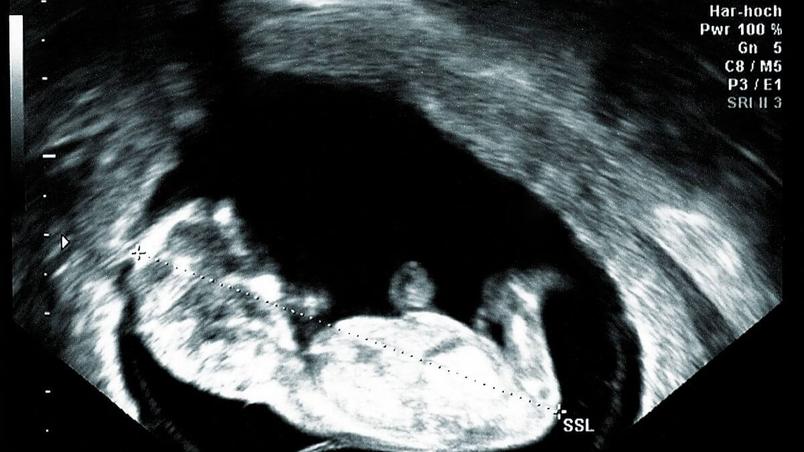
- Size up your little one. During your ultrasound at 12 weeks, the measurement will be taken from the top of their head to their bum. The average size of your baby at this stage is around 2.5 inches. That’s about the length of two and a half paper clips!
- Find out how many babies are actually in there. This is the time when you discover whether you need to double up on future high chair purchases—or, in some cases, triple or quadruple up. If you are in for double trouble, your doctor may also be able to tell whether you can expect fraternal or paternal twins. Deep breaths!
- Nuchal translucency screening. The nuchal translucency screening checks for conditions such as Down syndrome and Edwards Syndrome. These are usually only conducted if baby is considered to have a slightly higher chance of developing one of these conditions. [2]
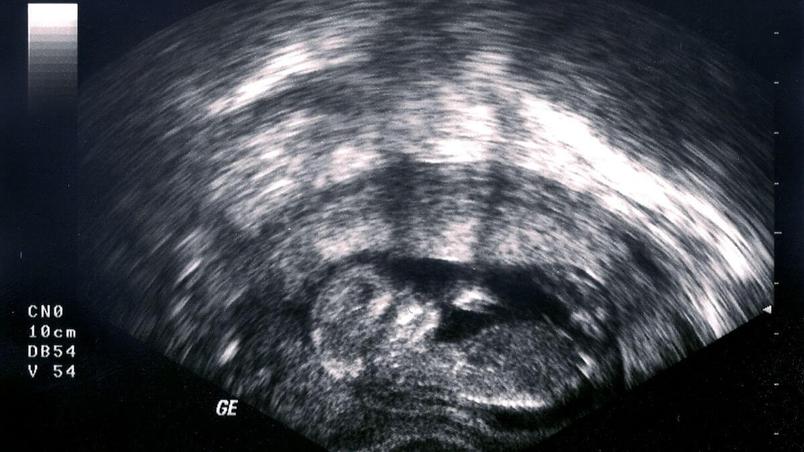
What does a 12 week ultrasound look like?
Well, typical 12 week ultrasound pictures are a sea of black and white and gray. Within that sea, you should be able to make out some mini legs, a mini spine, a mini face (often with a mini nose bone), and a mini body.
In the 12-week sonogram, you’ll also be able to see your placenta and how your blood is moving around inside you to ensure the process all goes smoothly.
You’ll also likely get a beautiful snapshot to go up on your fridge – that’s one of the best things about 12-week ultrasound pictures!
Can you tell gender at 12 weeks ultrasound?
Can’t wait to see if you’re having a boy or girl? Usually, you’d have to wait until at least week 18 before your doctor can accurately determine your baby’s sex. And many doctors will choose to wait.
But Nub Theory may provide a clear indication as early as 12 weeks. At this stage, your baby’s genitals are currently just a little bump (or a nub) but its direction could tell you if you can expect a boy or a girl – vertical for a boy and horizontal for a girl. [3]
Keep in mind there’s a slim chance this may ‘change’ with future ultrasounds. This is because the 12 week ultrasound gender accuracy is about 90% – so 1 in 10 times, the sex of your baby may be inaccurate. [4]
If you want absolute accuracy, we suggest waiting until your second trimester so you can host your gender reveal with confidence – 99% confidence at that.
Can you see any abnormalities in a 12-week ultrasound?
Yes, some abnormalities can be found during a 12-week ultrasound, but these tend to be those of the more visible and prominent variety. Your doctor may suggest carrying out a nuchal translucency screening, which can pick up an increased chance of baby having Down syndrome, Patau syndrome, and Edwards syndrome. [5]
To do this, your doctor will take a blood test and measure the amount of fluid on the back of baby’s neck. All babies have fluid behind their necks, but a build-up of fluid can indicate a chromosomal or genetic condition – this includes congenital heart conditions.
It all sounds nerve-wracking and intense but what’s important to keep in mind is that a nuchal translucency screening is a risk assessment not a diagnosis. They are also optional for anyone who is pregnant.
If your doctor isn’t sure about an abnormal 12-week ultrasound, they may advise you to wait until around 20 weeks for another ultrasound to make sure.
How do I know my fetus is ok at 12 weeks?
It’s human to fixate on the worries, so let’s focus on signs your baby is thriving. By 12 weeks, your baby is about 2.5 inches long (the size of a really cute plum) and weighing about 0.49 ounces – that’s about 3 grapes! 🍇
All their internal organs, bones, limbs, and muscles are in place - even their sex organs are taking form. During your 12-week ultrasound, you’ll be able to hear baby’s heartbeat and see their face being to take shape.
It’s all so exciting!
What are signs of a healthy pregnancy at 12 weeks?
It’s not just baby that’s changing, your body is, too. At 12 weeks pregnant you’ll have all manners of weird pregnancy symptoms, from bleeding gums to nausea.
It’s not glamorous, but these uncomfortable sensations can all point towards a healthy pregnancy (we notice the irony too)
Does risk of miscarriage go down at 12 weeks?
For many pregnant women, the first trimester carries just as much worry as joy. Pregnancy loss is a very real and valid concern so if you find yourself thinking about it a lot (a little too much even), you’re not alone. The conversations around pregnancy loss are frequent in the Peanut community, so you know you’re in a safe space to share those fears.
There’s plenty of statistics around early pregnancy loss, which can sometimes be more harmful than helpful. And you know, that’s not what we’re here for.
What we can tell you is that the risk of miscarriage goes down significantly at 12 weeks – we’re talking from an 80% chance in your first trimester to 1.7% at week 12. This will keep on decreasing but if you need some more reassurance, you can take a look at our in-depth piece on what a miscarriage looks like at every stage of pregnancy. [6]
Can twins be missed at a 12-week scan?
Sometimes, yes, although it’s a very slim chance that multiple babies will be missed during your 12 week ultrasound. It’s more likely to be missed during your 8 week ultrasound, but by this point, both (or more) babies are easier to see.

What does a baby look like at 12 weeks?
With options for a 3D or 4D 12-week ultrasound and even a standard 12-week sonogram, you’ll have ample opportunity to see baby. But what exactly can you expect to see?
Well, at 12 weeks, your fetus will be about about the size of a lime or that adorable plum we mentioned. Which is exactly where the similarities with fruit ends.
You’ll be pleased to know that by week 12, your baby will start to look a little more ‘human’, but they’ve still got a long way to go with growing!
Can you see arms and legs at a 12-week scan?
Yes, although they’ll be teeny-tiny, baby’s limbs will be formed, along with their nervous system, circulation, and organs. Baby’s face will also be taking shape and their bone structure will be set.
It’s getting more real by the second!

Do you hear the heartbeat at 12 week scan?
Oh yes! One of the highlights of the 12-week ultrasound is potentially hearing baby’s heartbeat. This will sound like a little flutter, beating at around 120-160 beats per minute – enough to bring a happy tear to the eye.
Can you feel baby move at 12 weeks?
With all this growth and heart thumping happening, it would be fair to think baby will have the movements to match. There’s no doubt baby is moving quite a bit but it’s still too early to feel them move. Called quickening, the sensation of baby boogieing usually kicks in about [week 16].
Even at that, you may not feel the fluttering and bubble-like popping until week 20 if this is baby number one.
What's the earliest you can get a 3D ultrasound?
With all this growth and movement happening of course you want to get the best picture of your baby possible. There is a possibility of a 3D 12-week ultrasound instead but it’s fairly uncommon.
There’s honestly not much to see at this stage, so if you want to have a 3D ultrasound, it might be better to wait until a little later on. Most medical professionals would recommend anywhere from around 24 weeks or 27 weeks to 34 weeks for the best results.
Does your due date change at 12 week scan?
Yes, your due date may change during your 12-week ultrasound. That being said, if you’re calculating from your LMP (last menstrual period), that’s generally considered to be the most accurate way of predicting your due date. But even this timeline is no sure thing.
It seems only around 5% of babies are born on their due date with first babies tending to make their arrival after their due date. It can be hard to move from a cozy spot. [7]

What should I ask at my 12 week scan?
So you know what to expect and what to keep an eye out for, but is there anything else you need to ask? A 12-week scan is the perfect time to share concerns, gain insight, and stock up on advice specific to your pregnancy journey. But it’s also highly emotional and questions will just pop right out of the mind the minute the first image of your baby pops on screen.
To help you get the most out of your appointment, here are some questions you can come prepared with:
- How much do you need to undress?
- What are they looking out for in your 12-week scan?
- Is baby developing as expected?
- Does baby’s heartbeat sound normal?
- What should you focus on right now for yours and baby’s best interests?
- Can you get a recording of the heartbeat on your phone?
- When is the next scan and what can you expect?
A 12-week scan is more than just getting that all-important 12-week ultrasound pic. It’s about setting your pregnancy journey up for success by equipping you with as much information as can be given this early in.
There’s no question too silly to ask – this is your journey mama and your comfort is the priority (it always is). So ask for advice on healthy steps you can take, discuss precautions, and share your concerns. There’s never a wrong question.
Tips for your 12-week ultrasound
The 12-week ultrasound can feel like a big moment. Exciting, nerve-wracking, emotional… sometimes all at once. A little prep can go a long way in helping you feel calmer and more in control when the day arrives.
Here are some gentle, practical tips to help you through it:
- Follow the bladder instructions you’re given: Some clinics ask for a full bladder, others don’t. If you’re unsure, call ahead. It’s one less thing to stress about on the day.
- Wear comfy, easy-access clothing: Two-piece outfits are your friend. You’ll likely need to lift your top or lower your waistband, so comfort wins here.
- Eat beforehand unless told otherwise: Feeling faint or nauseous doesn’t make the experience any nicer. A light snack can help keep your blood sugar steady.
- Bring support if you can: Whether it’s your partner, a friend, or just someone on FaceTime afterward, having someone to lean on can really help.
- Know that nerves are normal: Even if this isn’t your first pregnancy, scans can stir up a lot of feelings. You’re not dramatic, you’re human.
- Prepare questions in advance: It’s easy to forget what you wanted to ask once you’re in the room. Jot them down in your phone.
- Ask for photos (if you want them): Not every clinic automatically offers them, so it’s okay to ask. And it’s also okay if you’re not ready to look yet.
- Plan something grounding afterward: A walk, a coffee, a quiet cry, or a celebratory treat. Whatever you need. You don’t have to rush back to “normal” straight away.
And remember: there’s no right way to feel before, during, or after your 12-week ultrasound. However it lands for you, you deserve support.
With your 12-week ultrasound in hand and potentially a heartwarming heartbeat as your new ringtone (no judgment here), it’s a good time to start thinking about your birth plan. Or, you know, sharing your ultrasound with your Peanut community.
Congratulations on reaching week 12, mama. Onwards to the second trimester. Here we go! 🤰


Popular on the blog

5D Ultrasound: Worth the Splurge or Just Hype?
By
Tassia O'Callaghan

Baby Heart Rate: Gender Predictor or Old Wives’ Tale?
By
Keshia Sophia Roelofs

Nub Theory: The Most Accurate Weeks and Why
By
Keshia Sophia Roelofs

Pregnancy Scans: Your List of Scans During Pregnancy
By
Deborah Vieyra

40 Week Ultrasound: Key Facts
By
Tassia O'Callaghan

8-Week Ultrasound: What to Expect
By
Peanut
Trending in the community
Midwife appointment
I am 37 + 4. My last midwife appointment was when i was 36 weeks. My NEXT appointment is booked for 41 weeks with my midwife and nothing in between? Im so confused. Is this normal?

7
C-section help please 🙏
Hi everyone !
I had my appointment yesterday 38+5 weeks which went abit sideways to say the least 🙈
I was meant to be getting induced next week but little man has apparently jumped from 8lbs 6 to nearly 11pounds in 2 weeks (no gestational diabetes)
I got told I had to have a C-section instead now and have never had one so am flapping like a headless chicken 😂 what essentials did you all need / wish you had after a C-section please 🙏 any tips welcome as I’m currently just a blubbering mess as it wasn’t how was planned 😂😂

8
Going into labour
Is there anything that actually works to try and go into labour?
I'm willing to give things a go as I'm so fed up now 😂 aiming for a vbac so trying to avoid c section if I can 🤞🏻 but have agreed to section if I get to due date and nothing has happened 🙈
7
Flying pregnant
I’ve just found out I’m pregnant just over 4 weeks I go away at the beginning of November I’ll be roughly 10-11 weeks I won’t have had a scan yet (unlikely) I’m not even sure if I will have had my first midwife appointment by then🤔 am I still okay to fly? It’s a 4 hour flight.
Should I get a private scan to confirm everything is okay before hand?
10
Baby Girl
What do we think about the name Vivian and opinions on spelling?

5
Waters leaking or just wee
How do i tell the difference? I got up and leaked a bit went for a wee and then leaked again straight after, i led down in bed moved my leg and leaked and stood up and leaked again. Im scared im not ready🤣🤦🏽♀️ive got no pains or anything
11
Find your
village

Scan to Join
Rated 4.4


Trusted by 6M+ women
.png?_wwcv=1842)
Download the Peanut App


