
Baby Crowning: What Is It & What Does It Feel Like?


Baby crowning is when the baby’s head emerges out of the birth canal. It can be intense, but it also means that baby is finally here!
As the saying goes, Knowledge Is Power.
You’ve heard people talk about baby crowning and the “Ring of Fire”, and as your due date approaches and you’re preparing for birth, you want to know more.
We’re here to break it down for you, mama.
Baby crowning pictures can be the stuff of horror stories for some.
But your baby crowning means you are super close to meeting them... yay!
So, hold onto your seats (literally)... we’re talking all things baby crowning.
In this article: 📝•
What does it mean when a baby crowns?
•
What does baby crowning look like?
•
What does a baby crowning feel like?
•
What are the signs of crowning?
•
When do you start crowning?
•
How long can a baby be crowning?
What does it mean when a baby crowns?
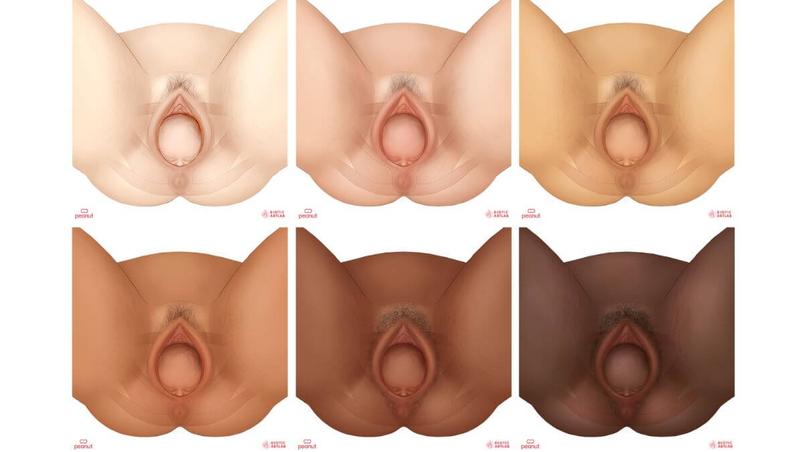
Baby crowning in labor is the point when your baby’s head is visible from the outside and doesn’t slip back up the birth canal between contractions.
At this point, they’ve descended through the birth canal, and you’re almost at the end of your labor.
Hooray!
What does baby crowning look like?
When a baby is crowning, those at the action end will be able to see the top of their head and get a sneak preview as to whether they’ve got hair (or not)!
If you’re interested, during labor you can ask your doctor or midwife for a mirror to take a look at your crowning baby.
Or you could reach down and touch their head between contractions.
Or you can totally do the opposite and keep your eyes squeezed shut in concentration ‒ no judgment here!

What does a baby crowning feel like?
While everyone’s labor journey is unique, vaginal crowning is often the moment of most intense pain during labor.
At this moment, the largest part of your baby ‒ their head ‒ is stretching your vaginal opening.
Welcome to the “Ring of Fire”.
Sounds pleasant, right?
Well, it’s not the same for every pregnancy, but here’s how it might go.
You may feel a strong, burning pain, or it may feel more like numbness as the nerves around your vagina are blocked by the stretching skin.
For some, the pain is quite mild.
Whatever level of pain, it is only temporary, as your baby crowning is usually over quite quickly.
So try to focus on baby and the idea of temporary pain when the Ring of Fire starts to burn ‒ we know, easier said than done.
The experience of your baby crowning will also depend on your pain relief choices.
Some mamas who opt for an epidural or nerve blocker are likely to feel intense pressure, rather than pain, as baby presses down on their perineum.
But even moms-to-be who have been there before may find that each baby crowning experience feels different ‒ your first birth might be (relatively) pain-free, but your second might be more painful, and vice versa.
How painful is the Ring of Fire?
We’ll let other moms tell you their experiences ‒ after all, every pregnancy, birth, mama, and baby is different.
- “I very much so experienced the Ring of Fire, but it was nothing compared to the contractions! Contractions were way worse than the Ring of Fire. Ring of Fire just felt like a lot of pressure. Didn’t really hurt.” ‒ Faith
- “I didn’t have the Ring of Fire but I did feel like my clit was tearing into 4… and a friend of ours just had her second and said the same thing!” ‒ Jessica
- “I heard so much about the Ring of Fire from everyone before I gave birth but I had an unmedicated birth and didn't feel it at all.” ‒ Lacy
- “It’s not the same pain as contractions, it feels like it’s burning.” ‒ Lisa
- “What has been described to me as the Ring of Fire felt like I had a scratch in my vagina. Bearing in mind I was only using a TENs machine with no pain medication.” ‒ Natalya `spacer
- “I didn’t feel it, and I was unmedicated, too. I took my time and allowed things to stretch slowly. Didn't feel it, didn't tear, and baby even had her hand up by her face so I was amazed! I did have an internal tear, but since it was all the way ‘up there’ it was basically unnoticeable The Ring of Fire is your body's way of telling you to go slower and give yourself time. You shouldn't forcibly push against it, that's how you tear.” ‒ Emma
- “One word: Epidural. It saved my life, after going through contractions from hell. Didn't feel a thing.” ‒ Linda
- “I personally didn't get a Ring of Fire. It's painful, but not unbearable. I managed with just some gas and air. Everyone will feel pain differently.” ‒ Aimee
- “How it felt like for me was like my butt ripping (lol) but it didn’t. I got cut twice because my skin wouldn’t stretch and my last baby was a C-section.” ‒ Katie
- “I didn’t feel the Ring of Fire and I had no pain relief either. It was over in a flash, I was so shocked when she was slung onto my chest for skin-to-skin!” ‒ Priya
- “I felt the Ring of Fire and it was the worst of it all (no epidural) but I knew that it was for a short time so I pushed the absolute hardest I possibly could and it was over within seconds after it started.” ‒ Hilary
- “I kept yelling, ‘I’m tearing, I’m tearing!’, but I didn’t tear at all so it was definitely the ring of fire. But it was instant relief once babe was out.” ‒ Hannah
- “Baby crowning was the only pain I felt throughout my birth. The contractions for me just felt like strong muscle movements.” ‒ Steph
- “All I had was a tiny sting/burn the second his head started coming out and right after that it stopped and no more pain. My family says my birth was freaky though, because it happened very quickly and I hardly felt anything. Had no pain meds at all.” ‒ Jade
- “Nothing beats the pain of contractions! 😭” ‒ Kolsuma
- “I definitely felt some burning as she was crowning. I could practically see what was happening in my head. But the midwife assisting me held a warm compress against the perineal area which I think did more than I realize.” ‒ Corrine
- “I experienced it for maybe 10 seconds and then his little head popped out and that was it! Didn’t even feel it when his body came out.” ‒ Nat
- “I had a natural water birth with my second with no drugs and honestly the pushing baby out didn’t hurt at all! The contractions were way worse.” ‒ Alysha
- “I had the ring of fire. Contractions hurt but weren’t too bad, Manageable. But the ring of fire burned like heck!” ‒ Heather
- “My daughter was an unmedicated birth as I didn't have the time to get anything (almost had her in the elevator) I think the worst part is the Ring of Fire, honestly, I'm not gonna lie, I was screaming (thankfully I wasn't the only lady screaming so after I didn't feel so bad) but once baby is out the placenta just about feels like nothing honestly.” ‒ Alina
- “I had an unmedicated water birth. The contractions were intense but so much more manageable once I was in the water and doing my breathing exercises. Pushing was intense too but the down breathing really helped. The ring of fire literally lasted a few seconds as soon as her head was out it went. Try not to fear it too much, the more you relax the better.” ‒ LB
- “I had an unmedicated hospital birth with both children. I would say the worst bit was before the pushing stage. I didn't think the "ring of fire" was bad to be fair. They give you a local anesthetic to do stitches after birth.” ‒ Bianca
- “For me, it was very intense, but very brief.” ‒ Alex

What are the signs of crowning?
As your active labor progresses, your contractions will get more intense, and there may be no break between them.
Instead, you might feel a constant urge to bear down ‒ and push!!!
This is an indication that baby is close to crowning.
Your doctor or midwife will likely guide you through this latter stage of birth as your baby is crowning, and they may suggest you stop pushing.
Instead, you might be advised to let your contractions do the work for you, but this can be hard to do.
Trying to relax as much as possible, and practicing shallow breathing, are all encouraged to minimize the risk of tears.
Still, up to 90% of first-time mothers giving birth vaginally will experience a tear, but don’t panic.
Yes, we are talking about “tears” that rhymes with “bears”, not what you do when you cry (although that type of tear is super common with labor and birth, too!).
But it needn’t be something to fear.
Perineal or vaginal tears will require stitches after birth, but generally pain and discomfort will subside within a couple of weeks, and the stitches will dissolve.
Perineal massage is suggested by many healthcare providers to minimize the risk of tears.

When do you start crowning?
In the four stages of labor, baby crowning is the second.
So the first stage, active labor until complete dilation, can last anywhere from 10-20 hours.
Then we have the second stage, from complete dilation to delivery.
So when your cervix is fully dilated, it will soon be time to push.
So in the second stage of labor ‒ the same stage where baby’s crowning ‒ baby will also be making their grand appearance, aka the pushing or expulsion stage (sounds dramatic!).
Then the third stage is delivering the placenta, and the fourth is recovery.
How long can a baby be crowning?
Usually, baby crowning doesn’t last too long, usually just a few minutes.
But the whole second stage of labor can last anywhere from a few minutes to a few hours ‒ so it could be a while until you feel the infamous Ring of Fire.

How long does it take to give birth after crowning?
Are you wondering, how long after crowning is baby born?
Generally, once your baby has crowned, you will give birth within the next one or two contractions ‒ usually only a few minutes.
So baby’s very nearly here!
Have faith, mama ‒ once your baby is crowning, you haven’t got long to go.
So there you have it ‒ baby crowning can feel different for different mamas.Some find it tougher than contractions, others find it easier.
And some find it’s different for their second, third, or even fourth pregnancy ‒ so there’s really not just one way to experience baby crowning.
If you want to hear more from other moms-to-be who have been there, join Peanut and swap your birth stories!


Trending in the community
Pregnant with baby 2

10
Planned c section

10
I have a feeling like I might get attacked from this but I’m going to say it anyways. incognito 🥸 GLP1s being mainstream for regular people who are NOT diabetic or morbidly obese is bad for so many reasons 💉💉💉
12
C section compression socks

1
7
Getting pregnant after c section
3
Leaving baby for date night
3
Want to find your village?

Scan to Join
Rated 4.4


Trusted by 5M+ women
.png?_wwcv=1371)
Download the Peanut App


